
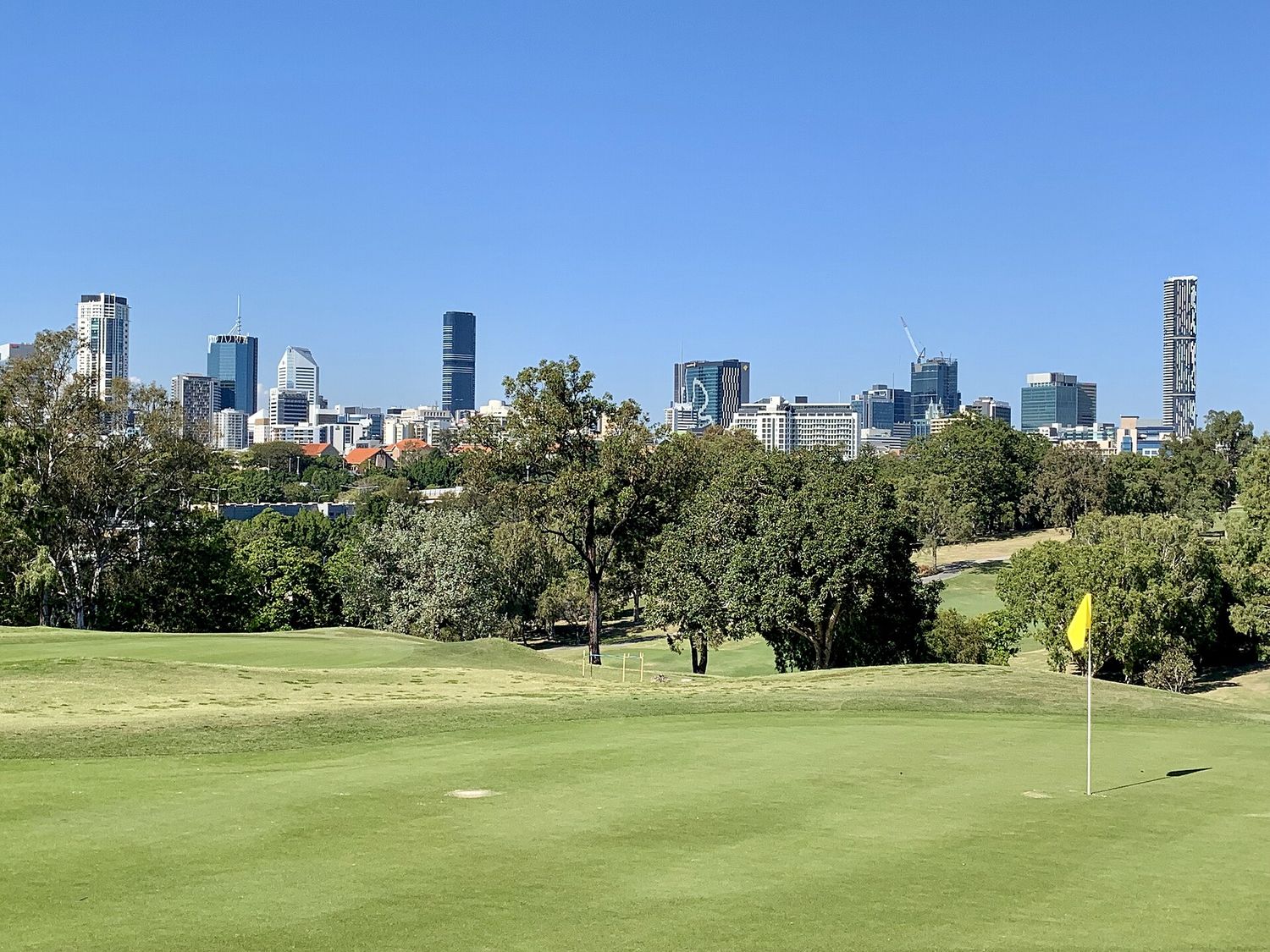
Golf greens · football pitches · municipal sports grounds
More water where the roots are. Same drainage.
A sand rootzone drains beautifully and holds nothing. Clinoptilolite is the one amendment that fixes both halves of that trade without touching infiltration.
USGA-spec sand gives you firmness, infiltration and resistance to compaction — and almost no capacity to hold water or nutrients. Peat decomposes. Calcined clays help with water but not with nutrients.
Cornell University measured the alternative directly. Adding 5–10% clinoptilolite by weight to a sand rootzone doubled plant-available water, from 6.4% to 12.6%, and lifted cation exchange capacity from 0.08 to 13 cmol/kg — while saturated hydraulic conductivity stayed at 40.5 cm/h against 39.6 for the sand alone. More water held. Nutrients held. Same drainage.
A four-year Polish study published in 2025 confirmed it in the field on perennial ryegrass and red fescue: better germination, more root mass, better ground cover, better winter hardiness, and fewer broadleaf weeds. The optimal rate was 5%.
That splits the product in two. A construction or renovation amendment is an engineering material at 5% by weight of the rootzone. A maintenance topdressing is an agronomic programme that builds toward the same concentration over years. Do not buy the second and expect the first.
Watch the two-minute film
What has actually been measured
- Plant-available water in sand doubled, 6.37% → 12.60%, at 5–10% by weightPetrovic 1993, Cornell
- Cation exchange capacity 0.08 → 13 cmol/kg at 10% w/wPetrovic 1993
- Drainage unchanged: 40.53 vs 39.58 cm/hPetrovic 1993
- Better germination, root mass, ground cover and winter hardiness over four seasons; optimal rate 5%Lipińska 2025, Poland
How to use it
- Construction / renovation: 5% by weight of the rootzone — about 50–70 t/ha at 100 mm depth. Incorporated, not broadcast.
- Maintenance topdressing: 150–300 kg/ha per month, 0.5–1.5 mm, blended into your normal sand dressing and timed with core aeration.
- Drainage layer: 16–32 mm under new turf.
- Every application adds permanent cation exchange capacity to the top of the profile. It does not decompose, it does not wash out, and it builds.
What it will not do
Our material is 2–3 on the Mohs scale, which is soft, and the founding study on this application asks a question nobody has answered since 1993: whether traffic crushes zeolite to silt and clogs the sand. We are running abrasion testing before we recommend the 1–3 mm grade as a permanent construction amendment, and we will publish the number whatever it says. We also do not claim the wear-tolerance figure some suppliers print — no wear study exists. And it holds ammonium, not nitrate and not phosphate.
Greenkeepers do not buy minerals from a brochure; they buy from a plot on their own course. Three sacks, two greens, one written protocol, moisture and firmness readings before and after. Ask for the trial kit.
Products and pack sizes
| Product | Grade | Pack |
|---|---|---|
| TURF-RZ-BB | 1–3 mm | 1.000 kg big bag |
| TURF-RZ-25 | 1–3 mm | 25 kg sack |
| TURF-TD-BB | 0,5–1,5 mm | 1.000 kg big bag |
| TURF-TD-25 | 0,5–1,5 mm | 25 kg sack |
| TURF-DR-BB | 16–32 mm | 1.000 kg big bag |
| TURF-SPORT-25 | 0,5–2,0 mm | 25 kg sack |
| TURF-TRIAL | 0,5–1,5 mm | 3 × 25 kg trial kit |
Specification
- Clinoptilolite content
- 93–100% (XRD)
- Cation exchange capacity
- 108–146 meq/100 g
- Bulk density
- 650–850 kg/m³
- pH
- 7.0–8.0
- Specific surface area
- 40 m²/g
- Pore diameter
- 0.43 nm
- Hardness (Mohs)
- 2–3
- Loss on ignition
- 6.4–15.8%
- Na₂O
- 0.3–1.3%
- Quartz
- 0–2%
Request products Download the four-page brochure (PDF)
Tell us the application and the volume. We answer with a written quotation.